
BIPV is Building Integrated PV, which is building integration of photovoltaics. PV is Photovoltaic.
BIPV technology is the integration of solar power (photovoltaic) products into buildings.
Different from the current large-scale application of rear-mounted photovoltaic power generation roofing system (BAPV), which uses special brackets to fix photovoltaic modules to the original roof structure, the building-integrated photovoltaic roofing system (BIPV) adopts a one-time construction and investment model.
Install photovoltaic power generation system bracket accessories, photovoltaic power generation module unit panels and other electrical equipment directly on the roof during the construction of the building roof. BAPV project BAPV refers to the solar photovoltaic power generation system attached to the building, also known as the "installation type" solar photovoltaic building. The main function of BAPV is to generate electricity, which does not conflict with the function of the building, nor does it destroy or weaken the function of the original building. In addition to the power generation function, BIPV will also have the structure and use of the function of the building itself, replacing the components of the original roof of the building and becoming an integral part of the building. As building components, photovoltaic power generation components not only need to meet the requirements of power generation and building functions but also need to meet the physical and chemical properties of materials such as weather resistance, safety, firmness, and airtightness of the bonding method.
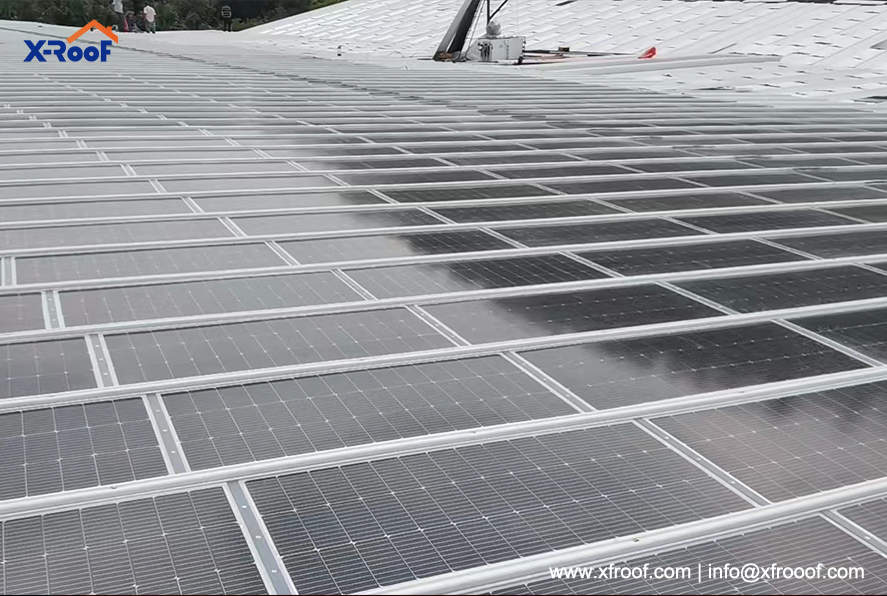
The photovoltaic building-integrated roof power generation system is installed and fixed in an interlocking manner through an integral support system composed of brackets, a horizontal water tank with an inverted U-shaped cross-section, and a vertical water tank with a W-shaped cross-section and island-type support. Fastening and sealing, not only the overall structure is light in weight and material saving, but also the installation structure of the solar power generation module is extremely stable, has a long service life, and is easy to install, disassemble and maintain.
- Economic cost
Cost comparison of construction materials based on 1MW of about 5900㎡ roof
|
Item |
XROOF BIPV |
BAPV |
|
Factory house panel |
Eternal series ASA Solar Panel |
840 type tile $7.5/㎡ (including construction cost) Color steel tile with thermal insulation cotton $10-14/㎡ (including construction cost) Seam aluminum-magnesium-manganese roof + aluminum alloy bearing $28.8/㎡ (including construction cost) |
|
System Stand Accessories |
Product already contains |
Fixtures, rails, fixtures, about $0.044/W, $0.044*140W/㎡ |
|
Photovoltaic modules |
Integration |
$0.3/W *140w/㎡=$42/㎡ |
|
Cost |
Comprehensive cost = system bracket accessories + photovoltaic power generation components |
Comprehensive cost = system bracket accessories + photovoltaic power generation components |
|
Comprehensive unit price per square meter |
$80-85/㎡ (including installation cost) |
$58/㎡ $62/㎡ $76/㎡ |
|
service life |
25 years |
10year (Or 25 years, depending on the color steel tile) |
2. Appearance of the building
The traditional steel structure rear-mounted photovoltaic power generation roof is later installed with brackets and photovoltaic panels on the color extruded metal plate. The roof is messy and the integrity is poor.
Building Integrated Photovoltaic Roofing System (BIPV) incorporates solar energy utilization into the overall design of the building, integrates architecture, technology and aesthetics, and uses photovoltaic power generation module unit panels and maintenance walkway panels directly as roof panels. A related design hides junction boxes, connecting wires, etc. under components and pedals.
BIPV can achieve the effect of preventing direct sunlight and rain erosion without affecting the appearance of the building, which perfectly realizes the combination of solar photovoltaic power generation and architecture. The roof is beautiful, simple and generous, and has the distinctive features of modern industrial buildings.
3. Design life
The photovoltaic power generation components of the traditional steel structure rear photovoltaic power generation roof are all in the open air environment and are exposed to long-term wind and rain.
The photovoltaic power generation components of the photovoltaic building-integrated roof only have the roof exposed and have a good sealing environment. The glue used for BIPV photovoltaic module packaging is PVB, and the PVB film has the characteristics of transparency, heat resistance, cold resistance, moisture resistance, and high mechanical strength, and has been maturely used in the production of laminated glass for construction, and can achieve a service life of 50 years or even longer.
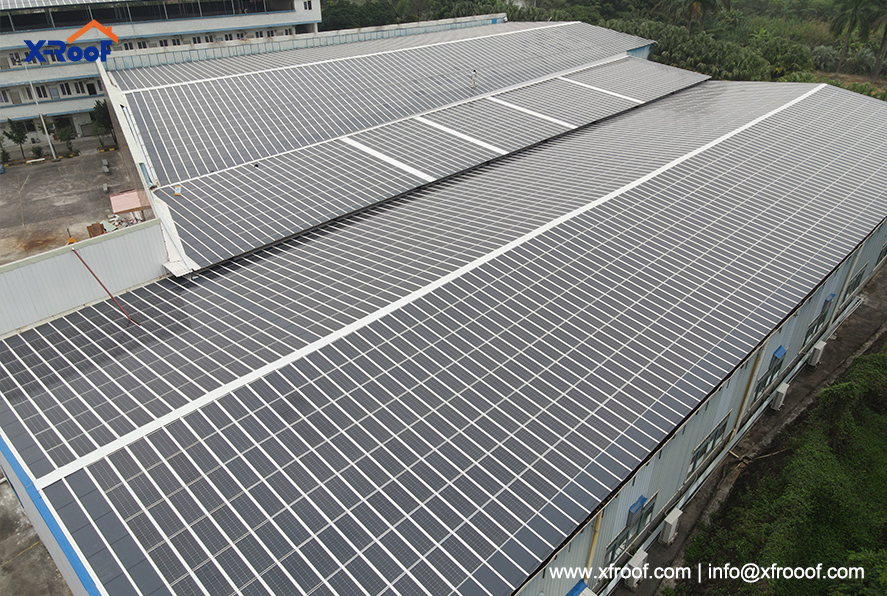
In addition, in the BIPV photovoltaic system, the selection of photovoltaic special wires (double-layer cross-linked polyethylene immersed tin copper wire), the selection of larger wire diameters, and the selection of connectors and other equipment with excellent performance can prolong the use of BIPV photovoltaic systems life.
4, The roof force
The pressure of the traditional steel structure rear-mounted photovoltaic power generation roof of the pressed metal plate (color steel plate or aluminum-magnesium-manganese plate) and the rear-mounted photovoltaic panel is complicated. The metal plate and the photovoltaic panel have both positive and negative wind pressure. The force of the photovoltaic panel is transmitted to the profiled metal plate through the bracket, and the long-term wind load and deformation will produce fatigue effects and affect structural safety.
The roof of the building-integrated photovoltaic BIPV photovoltaic system is just a simple roof, with clear structural stress and high structural safety. In addition, the system adopts double-sided glass components, and the thickness of the tempered glass conforms to the national architectural design code, which is obtained through strict mechanical calculation and can meet the requirements of roof safety.
5. Waterproof reliability
After the traditional steel structure rear-mounted photovoltaic power generation roof is installed on the profiled metal plate (color steel plate or aluminum-magnesium-manganese plate) roof, the second installation of photovoltaic modules and other equipment on the roof will be caused by hoisting, construction trampling, long-term photovoltaic self-weight load And local equipment overload, resulting in permanent settlement and deformation of color steel plates or aluminum-magnesium-manganese plates, resulting in hidden water leakage in the later stage and difficult to repair and find leakage points; with the longer service life, there will be more and more hidden dangers of water leakage.
The photovoltaic building-integrated roof system mainly uses hydrophobic glass panels, main water tank, waterproof sealing, etc. to form a roof waterproof and drainage system. Button-type zero-perforation connection, reliable sealing strips are used for fixing and sealing between components and components (or pedals), butt welding is used for the flushing edge, and the system is designed with an anti-vibration system, which can effectively prevent the high-frequency wind at the seaside. Loading, effectively digest expansion deformation, temperature deformation. The non-perforated connection technology of the entire roof surface avoids the hidden danger of water leakage.
6. Construction difficulty and speed
The traditional steel structure rear-mounted generation roof is constructed in two phases, and the construction period is long. Standing seam aluminum-magnesium-manganese roof panels are difficult to construct.
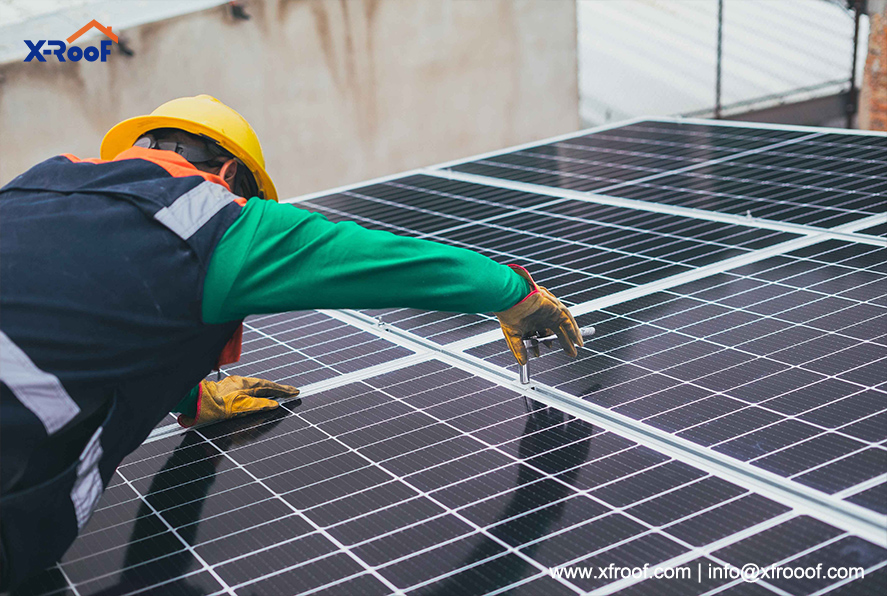
The building-integrated photovoltaic BIPV photovoltaic system has small roof construction difficulty, fast installation speed, and guaranteed project progress. After completing the construction of the bracket and the sink, each person should install at least 40 square meters (25 components) per day. Taking the main roof of 10,000m2 as an example, 20 people can complete the component installation and the overall sealing of the roof in about 15 days.
7, Roof operation and maintenance
The traditional steel structure rear-mounted photovoltaic power generation roof has been trampled many times during construction and maintenance, the roof deformation is large, there are many hidden dangers of water leakage, and maintenance is difficult.
Building-integrated photovoltaics BIPV photovoltaic system roof is designed and constructed synchronously, which protects the roof components and does not cause trampling damage during secondary construction.
The roof is designed and installed with a single battery module as a unit (160cm×100cm), which can be disassembled and repaired at will, and the maintenance is convenient; the roof is set according to a reasonable operation and maintenance radius. The integrity of the roof is protected.


Contact XROOF
We are your trusted supplier and manufacturer of plastic roof sheets.
Providing customers with high-quality plastic roofing products and satisfactory solutions - is the philosophy of XROOF.